BTSNZ brings the patient voice to NZSO 2026
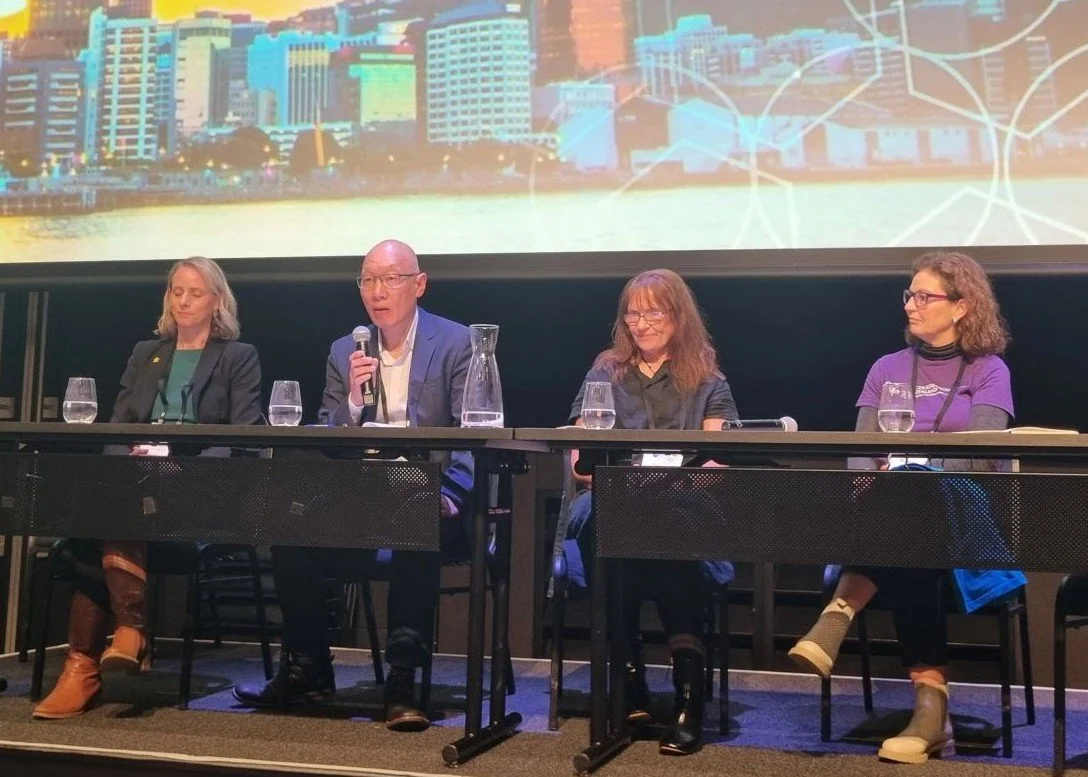
From L to R: Rachael Neumann (Cancer Society), Chris Tse (Brain Tumour Support NZ), Victoria Thompson (Bowel Cancer NZ), Michelle Sullivan (Cancer Research Trust) [Photo credit: Dr Melanie McConnell]
Advocacy took centre stage as Brain Tumour Support New Zealand joined cancer organisations, clinicians and researchers at the New Zealand Society for Oncology’s 56th Annual Conference in Wellington.
Brain Tumour Support New Zealand (BTSNZ) helped bring the experiences and priorities of people affected by brain tumours into the national oncology conversation at the 2026 annual conference of Te Pūao Mātai Pukupuku New Zealand Society for Oncology (NZSO).
Held at Tākina Wellington Convention and Exhibition Centre from 15 to 17 October, the three-day gathering brought together clinicians, researchers, nurses, allied health professionals, students and industry leaders. Its theme, Advocacy in Action: Shaping Cancer Care Together, focused attention on how collaboration can turn evidence and lived experience into better cancer care.
Patient advocates help set research priorities
BTSNZ trustee Chris Tse took part in the conference’s “Advocate voices in research priority” panel on the opening day. Facilitated by Dr Olivia Perelini, the session also featured patient advocate representatives from the Cancer Society of New Zealand, Neuroendocrine Cancer New Zealand and Bowel Cancer New Zealand.
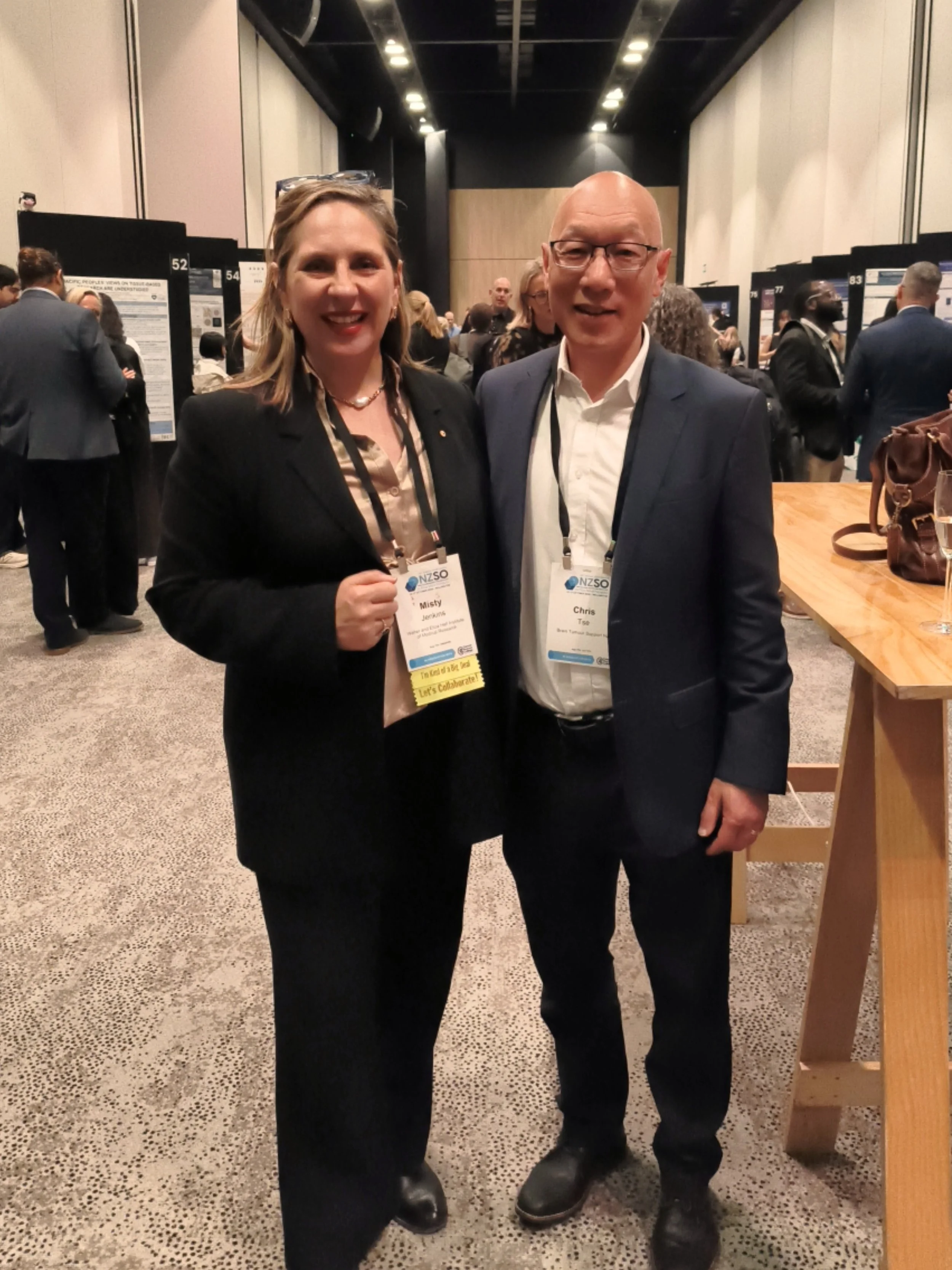
Professor Misty Jenkins and Chris Tse
The panel highlighted the importance of involving patients early in the research process, beginning with determining how research priorities are chosen. For the brain tumour community, representation in this process matters – the lived experience of patients and whānau can help ensure research addresses the issues that are most important to them.
Chris stressed that engagement must extend beyond individual patient anecdotes and that patient organisations have the ability, through properly designed surveys and studies, to identify mainstream priorities while accounting for diverse experiences. One research question identified from such surveys in the brain tumour community was: “Will I pass my brain tumour on to my children?” Chris said this suggests the need for more research into the causes of brain tumours.
He also said that while patients wanted to survive longer they also wanted to survive better, and that research into better supportive care can be equally as impactful as better treatments. He used the example of “scanxiety” where delays to monitoring MRI scans can cause significant stress and anxiety for patients. He suggested research into liquid biopsies could one day replace routine MRIs and help alleviate this stress.
Chris would like to see patients included more regularly in research discussions. He said that this was a growing trend overseas through initiatives such as Public and Patient Involvement (PPI). Many patients want to be involved with research so that they can feel engaged in their care, ensuring they are receiving the best care and aren’t missing out on the latest treatments. Chris suggested those organisations either funding research or conducting research could consider forming “patient advisory boards” to sit alongside their scientific or medical advisory boards.
Finally, he thanked the conference organisers for establishing this patient advocacy session and hoped that patient advocates would be invited to participate in future NZSO conferences.
Building connections across cancer care
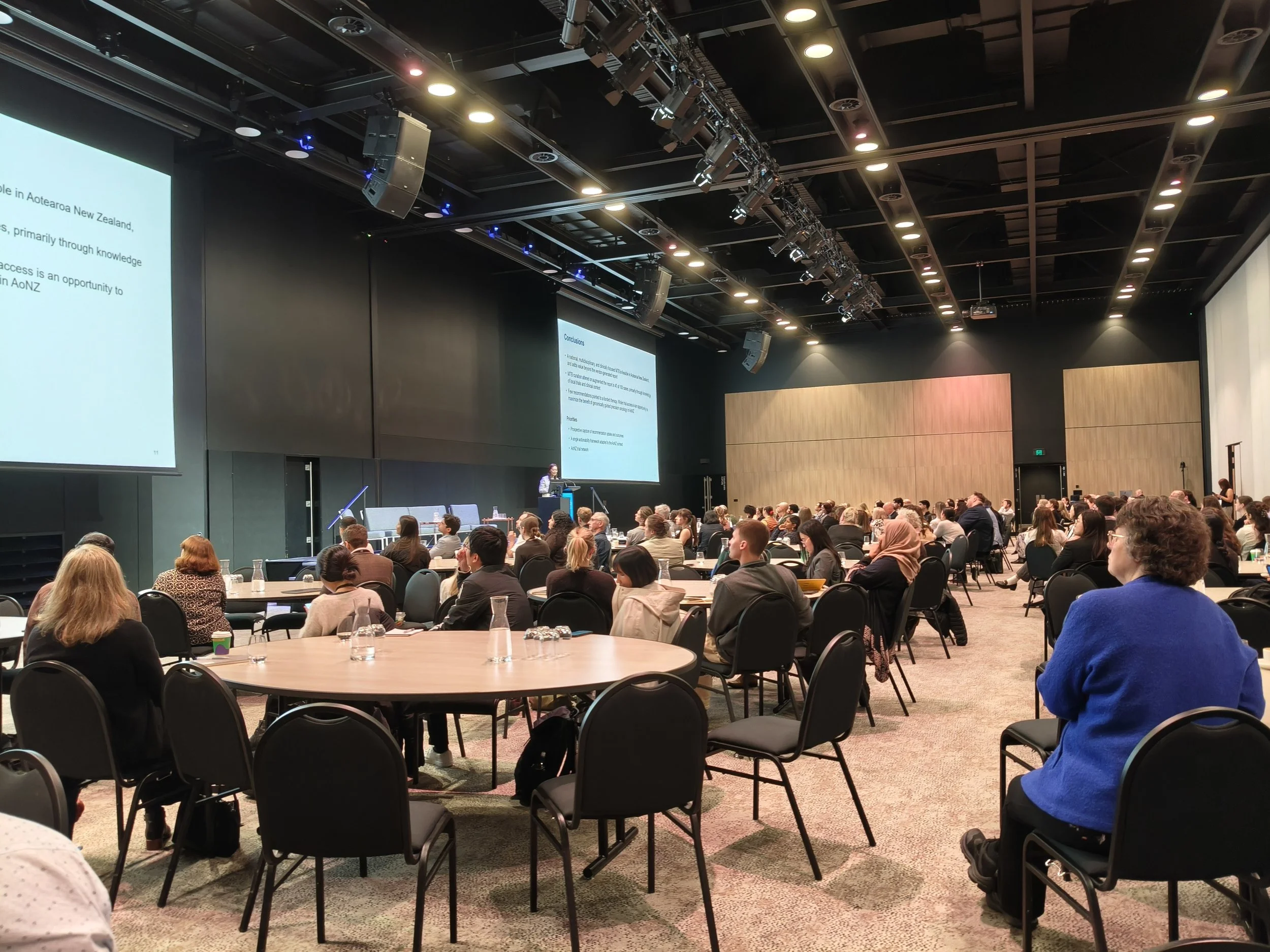
The wider programme combined special-interest-group meetings, keynote addresses, research presentations and multidisciplinary discussion. Sessions explored subjects ranging from molecular oncology and digital pathology to advocacy, clinical trials and emerging approaches to cancer treatment.
Brain cancer featured prominently in this year’s programme, with the Mārire Goodall keynote lecture delivered by Professor Misty Jenkins of the Walter and Eliza Hall Institute of Medical Research (WEHI) in Melbourne, Australia. Misty gave an inspiring talk about her journey as a young, indigenous Australian woman to become one of the world’s leading glioblastoma researchers. She is pioneering the development of CAR T cell therapies to treat glioblastoma.
Other brain tumour presentations were delivered by Wellington PhD students Naychi Myo Min (exploring BCL6 as a driver of glioblastoma growth) and Freya Weth (exploring repurposed drugs to treat glioblastoma).
Flying the flag for brain tumour patients
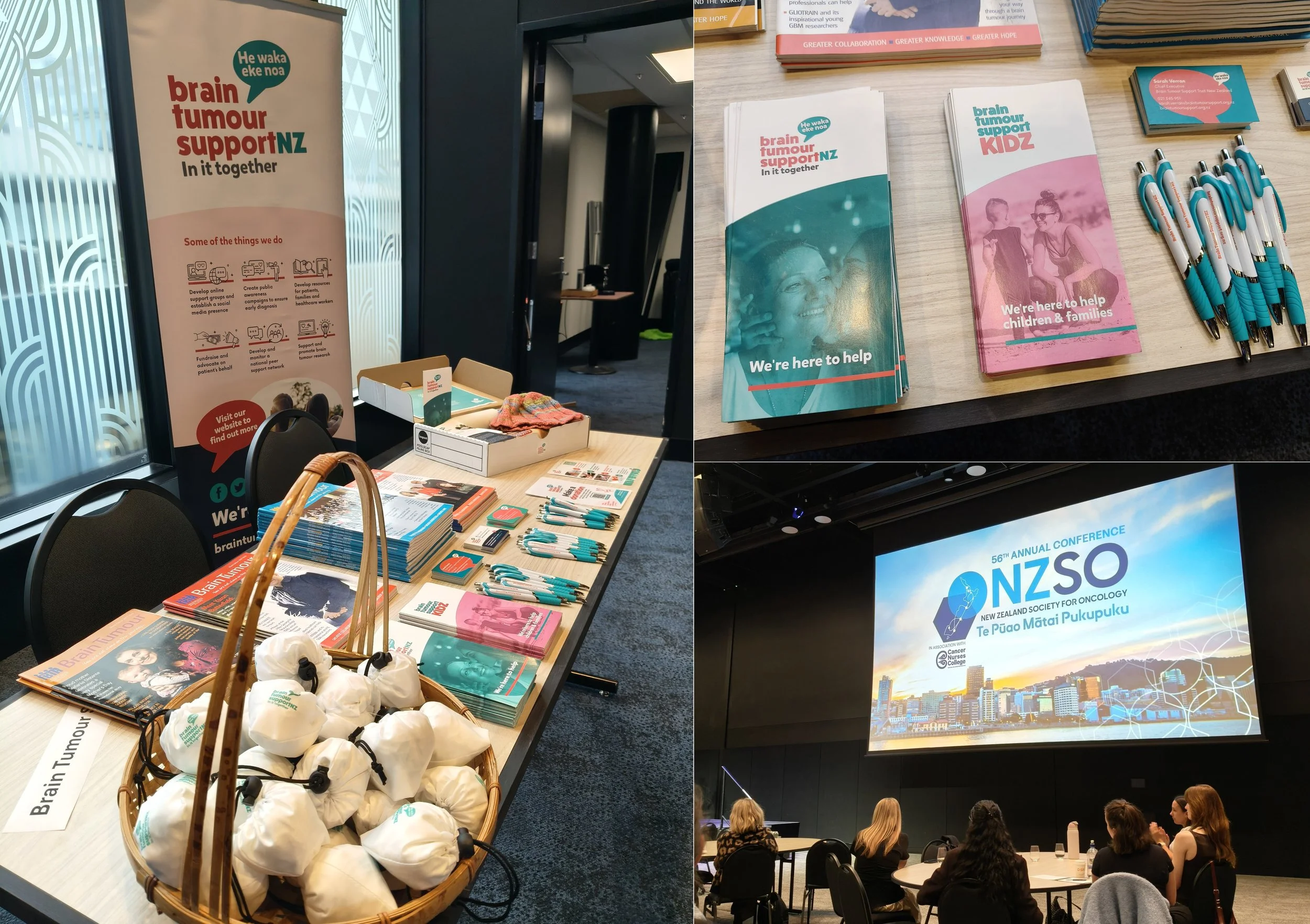
BTSNZ had a display table set up throughout the three-day conference, the first time that we have exhibited at the NZSO event. Chris reported strong interest in the BTSNZ materials, especially the Brain Box and Patient Guides. As a rare cancer, brain tumours are not necessarily front of mind for many cancer clinicians and researchers and Chris said it was a good opportunity to engage with doctors, researchers and allied health about the various unmet needs in our patient community.
For BTSNZ, participation in NZSO offered an opportunity to strengthen relationships across the health sector and keep the needs of people living with brain tumours visible within broader discussions about cancer research and service delivery. It also reflected a central message of NZSO 2026: progress is stronger when patients, advocates, health professionals and researchers shape it together.