BTSNZ participates in IBTA Summit
The International Brain Tumour Alliance’s 6th Biennial World Summit of Brain Tumour Patient Advocates was held in Rome, Italy, on 3rd to 5th November 2025. Brain Tumour Support NZ was represented by our chair, Chris Tse. In this brief article, Chris gives his thoughts on the conference.
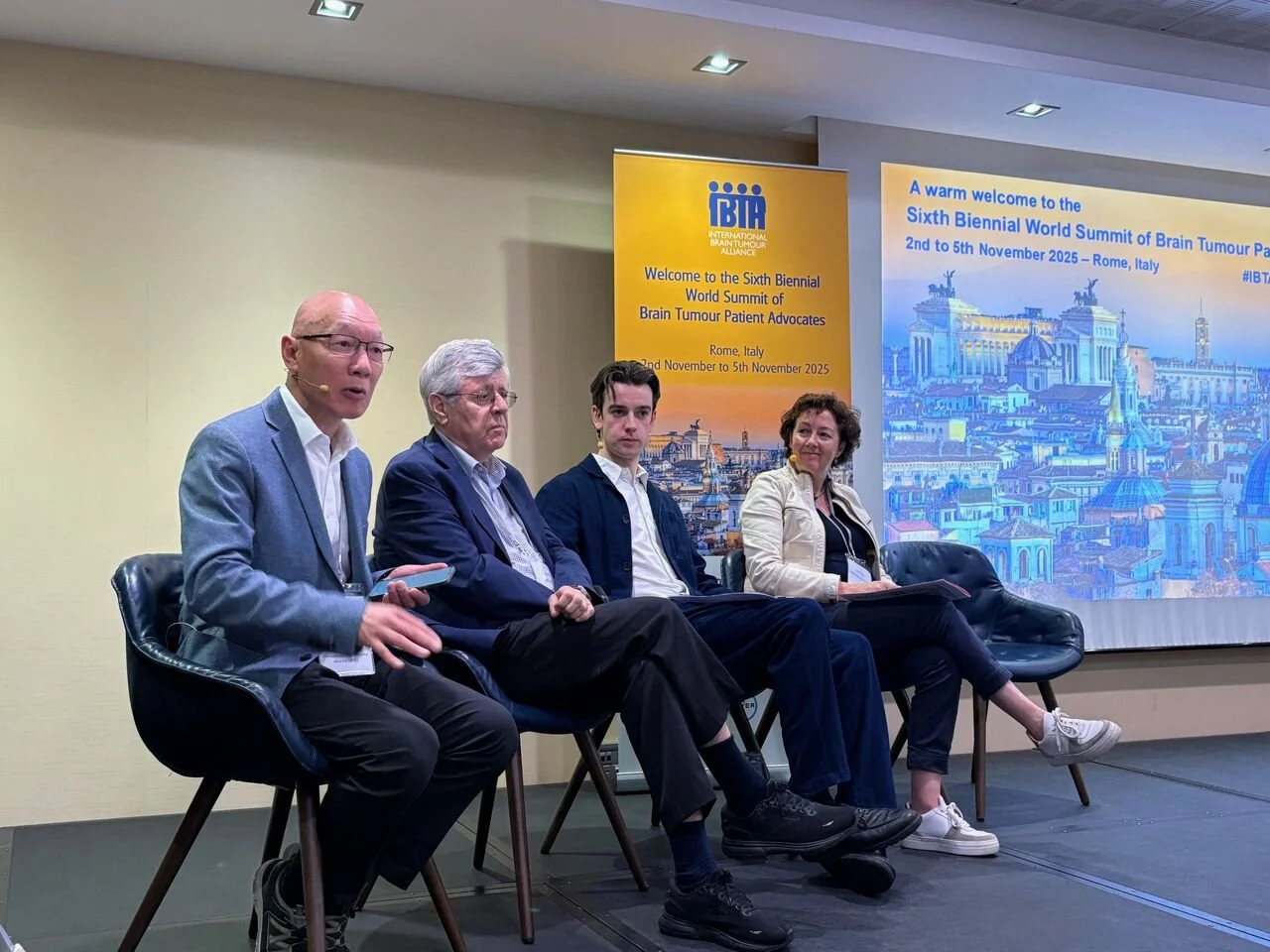
Chris Tse (far left) sits on a panel discussing the use of AI in neuro-oncology. His fellow panellists (L to R) are Dr Riccardo Soffietti (Italy), James Buckley (UK) and Petra Hoogendoorn (Netherlands)
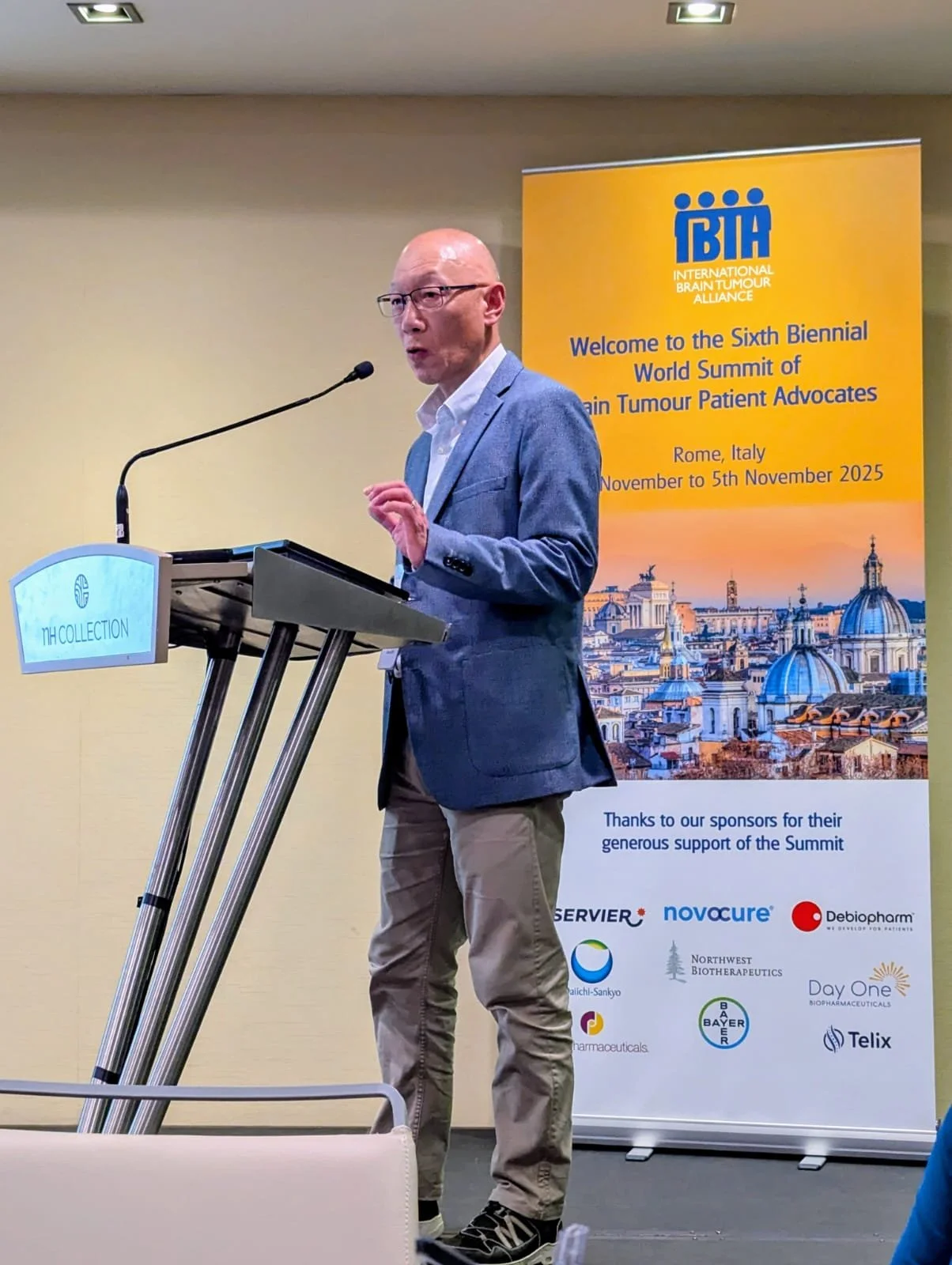
Chris Tse presents on the NZ Brain Tumour Registry project at the IBTA Summit in Rome, Italy.
It is always enlightening to attend international conferences. From our position at the bottom of the South Pacific, New Zealand must literally look up at the rest of the world to assess where we sit in terms of brain tumour care, treatment and research. We often ask ourselves: “Are New Zealand brain tumour patients getting the best available treatments globally and what can we learn from other countries?”
The biennial International Brain Tumour Alliance (IBTA) Summit is the largest gathering of brain tumour patient advocates in the world. Over 33 countries were represented at this year’s meeting, from the powerhouses of the US, UK and Europe, to developing countries in Asia and Africa. The tone is collaborative and collegial – larger players only too willing to help smaller, fledgling patient organisations become established and grow.
The opportunity to showcase the work of Brain Tumour Support NZ on the international stage is always a proud moment. My presentation on establishing the New Zealand Brain Tumour Registry was well received, particularly by people whose countries do not yet have their own registry.
I also participated on a panel discussion titled: “Artificial Intelligence (AI) in Neuro-Oncology: how AI shapes care and support for brain tumour patients”. This was a fascinating discussion on a topic which is just starting to impact healthcare processes around the world, in all parts of the patient pathway from diagnostics to drug discovery and treatments. My talk could be summarised in three words: “Excitement, Caution and Optimisim.”
The freedom to engage, learn and gain inspiration from other patient advocates during this three day conference was invaluable. It was immensely rewarding to spend time with representatives of the American Brain Tumor Association, the National Brain Tumor Society (USA), The Brain Tumour Charity (UK), Brainstrust (UK), Brain Tumour Research (UK), Brain Tumour Alliance Australia and the Brain Tumour Society of Singapore, to name a few.
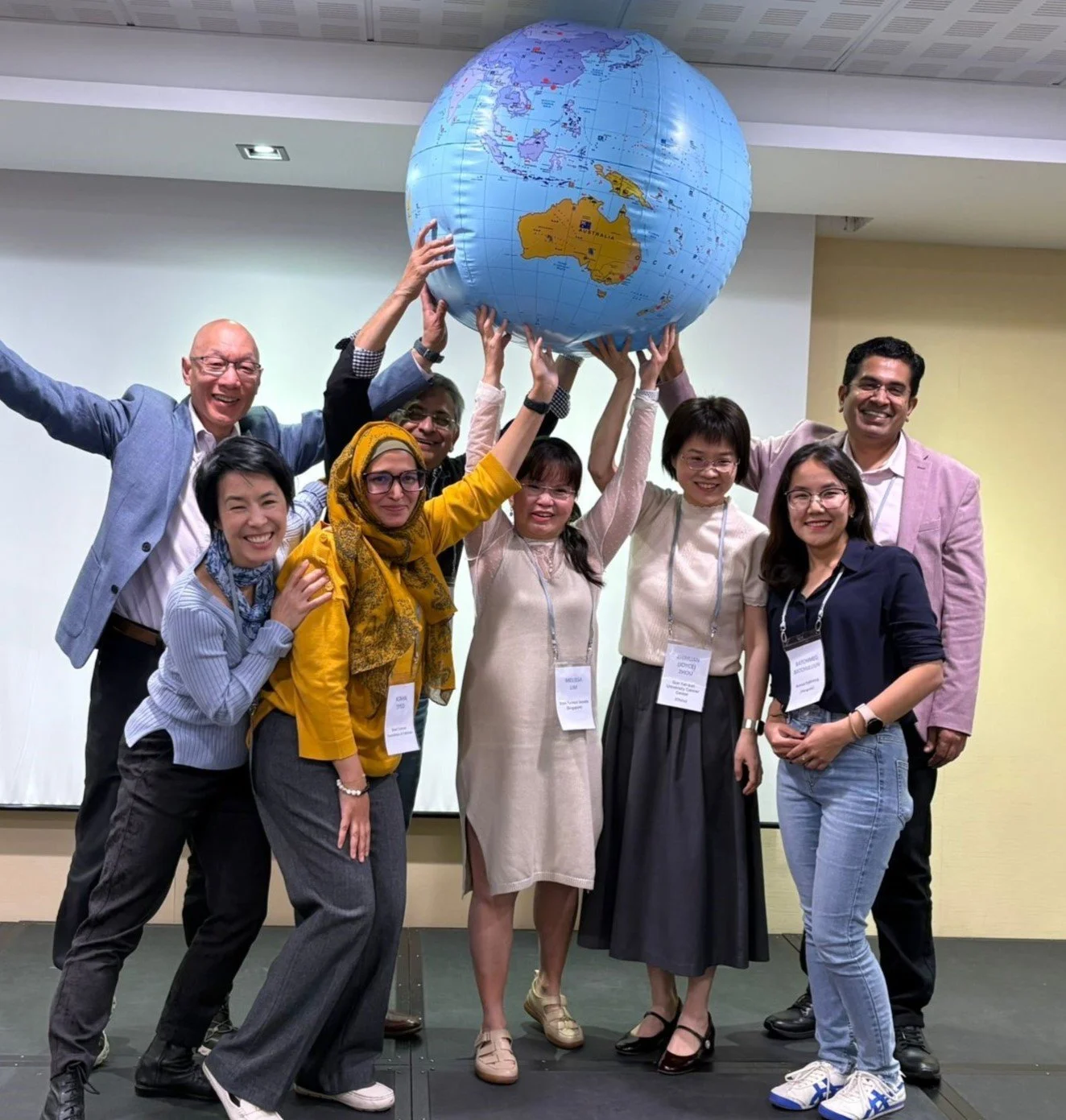
Chris joined members of the Asia Pacific Brain Tumour Alliance at the IBTA Summit.
At the conference dinner, I was fortunate to sit with world renowned Italian neuro-oncologist Dr Riccardo Soffietti and neurologist and president-elect of the European Association of Neuro-Oncology (EANO) Dr Roberta Ruda. It was a rare opportunity to not only tap into their professional expertise but to exchange experiences of family, vacations and hobbies. I hope I have convinced both of them to come down to New Zealand for the Asian Society of Neuro-Oncology (ASNO) meeting in 2028.
So, after three intensive days of conference presentations, expert panel discussions and workshops, how do I rate the state of play in New Zealand compared with the rest of the world?
In terms of access to treatments and overall care, we have some catching up to do. Most countries have access to bevacizumab for glioblastoma in the recurrent setting, although the UK and Europe are notable outliers. North America, Germany, and many countries in Asia have access to tumour treating fields (TTF) for high grade brain tumours and more and more countries are gaining access to Voranigo (vorasidenib) for low-grade gliomas. New Zealand is often a low priority for pharmaceutical companies when it comes to the commercial rollout of new medicines and this is an ongoing battle for us.
In terms of support and advocacy, I came away thinking there are some things which we are doing well but there is a lot more we can do. Caregiver support and better care at end-of-life stage are two areas where we need to do better for our patients and whānau.
Connecting with brain tumour patient advocates from other parts of the world, in an environment of shared experiences and learning, has provided me with the inspiration to work harder to improve outcomes for our brain tumour community in Aotearoa.
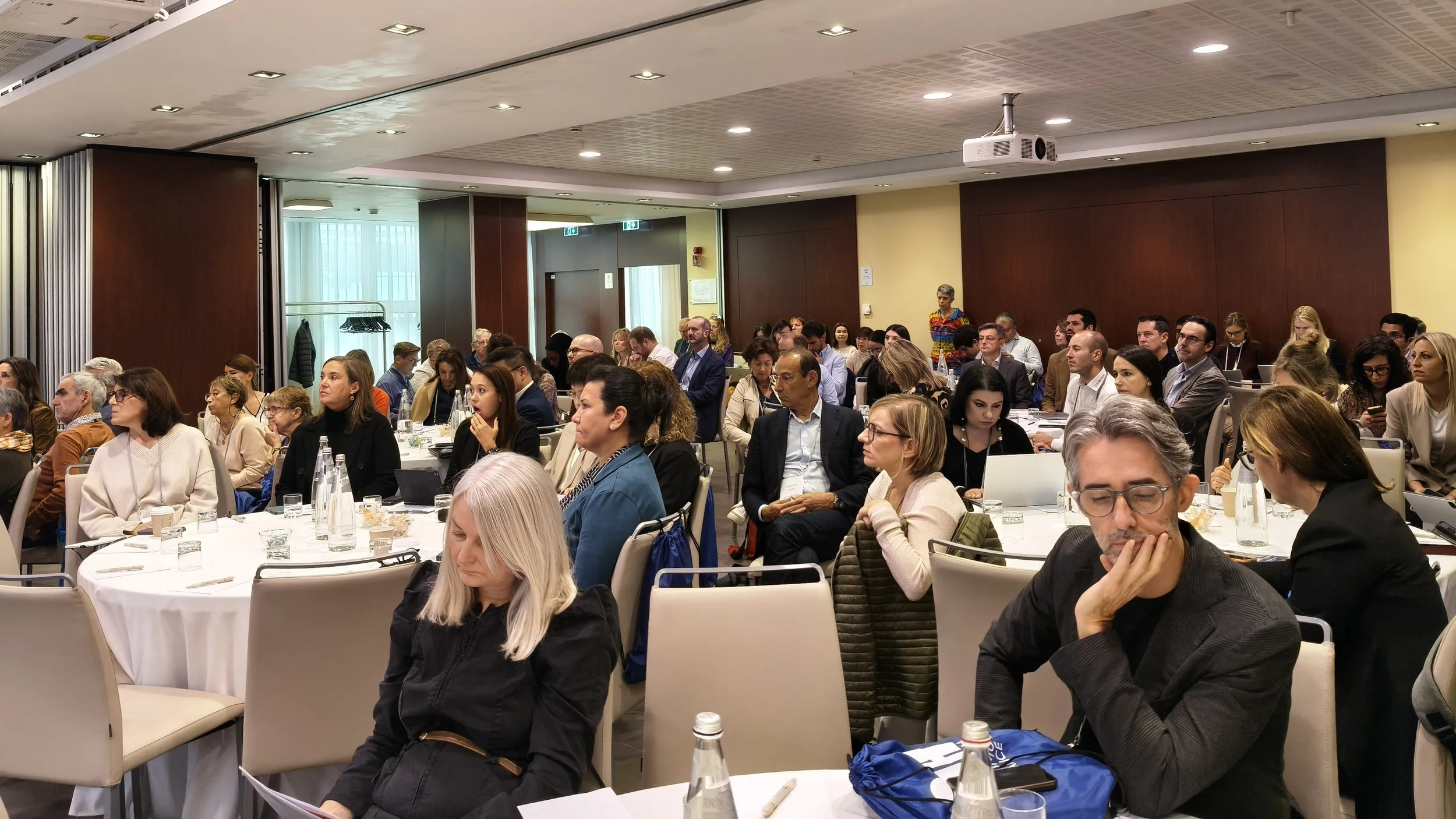
Delegates from 33 countries attended the IBTA World Summit of Brain Tumour Patient Advocates
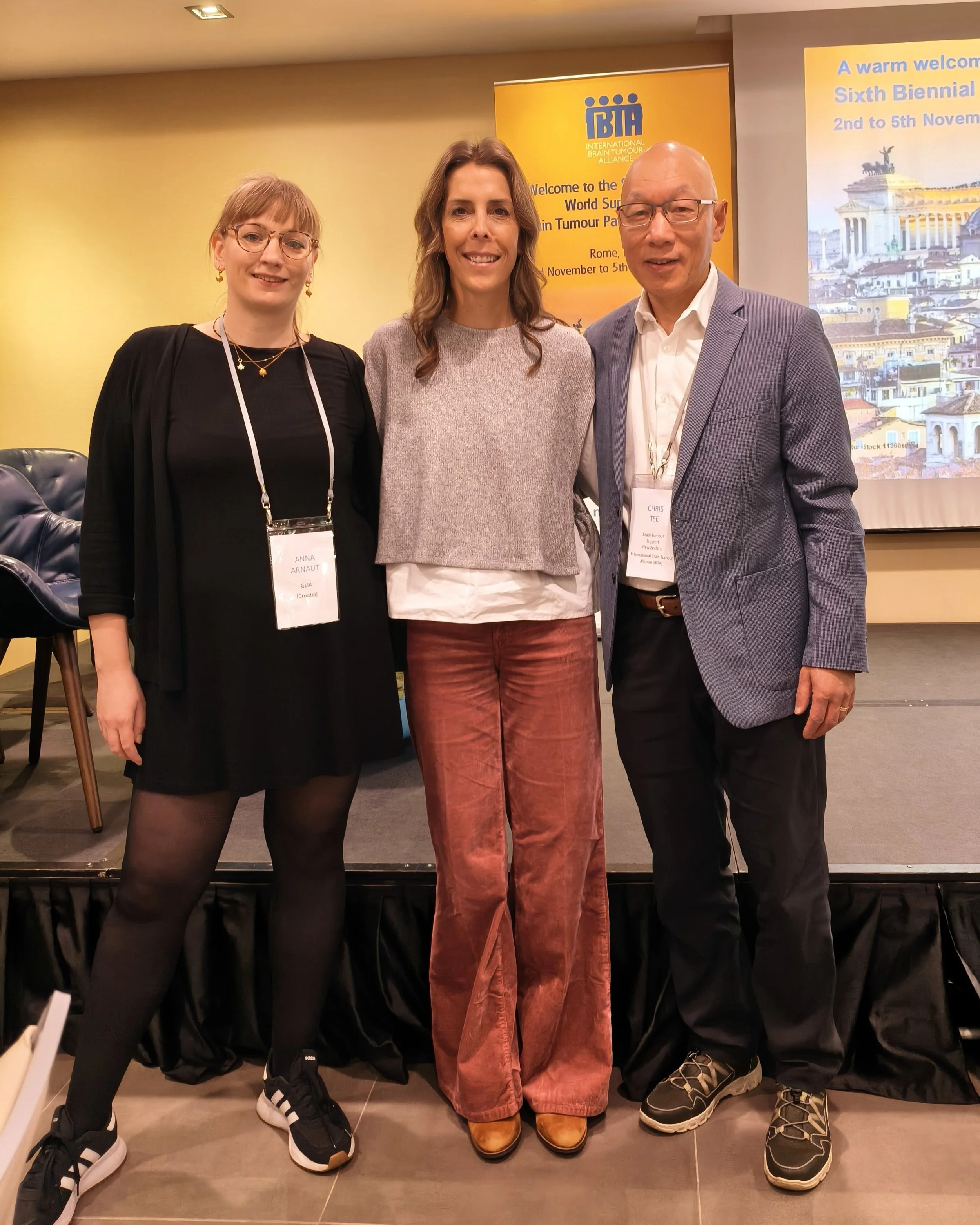
(L to R): Anna Arnaut (Croatia), Kim Wallgren (USA) and Chris Tse (NZ)
* Chris Tse is the Chair of Brain Tumour Support NZ and a Senior Advisor at the International Brain Tumour Alliance. His trip to Italy was sponsored by the International Brain Tumour Alliance.